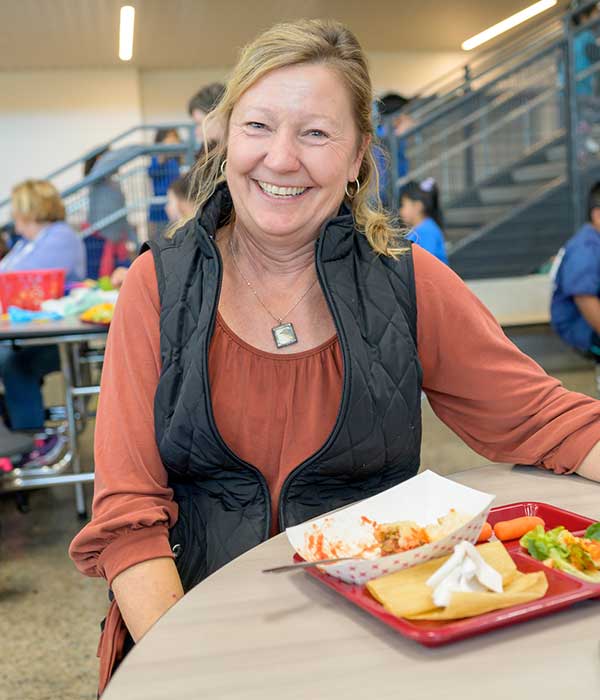
Lucy De León, owner of Tortillería y Tienda De León, with Angela Hedstrom, Community Food Systems Program Manager, at William Walker Elementary School cafeteria. Lucy connected with school district representatives during Ecotrust’s 2018 Local Link event and became their source for lunch-ready tamales. Photo credit:Shawn Linehan
Farm to school enriches the connection communities have with fresh, culturally relevant foods and local food producers by supporting gardening, agricultural education, and local food purchasing at schools and early care and education sites. In our farm to school work, Ecotrust partners with a wide range of school districts to ensure that all children have access to healthy, local, and culturally relevant food. And we advocate for policies that strengthen food access, Oregon’s agricultural economy, create local jobs, and help build a culture of belonging. This work is focused at the intersections of equity, economy, and environment and happens in relation to broader efforts to advance equity in food systems and educational spaces.
Today, Ecotrust serves as the Portland Metro coordinator for the Oregon Farm to School and School Garden Network’s Procurement Hub—a network of school food service directors and staff, producers, distributors, community partners, and educators who come together to approach shared challenges and opportunities in purchasing, serving, and celebrating local food. As part of this statewide network of advocates, we also work to ensure the viability of Oregon’s Farm to Child Nutrition Programs grant program, which supports local purchasing, classroom and garden-based learning, and access to critical infrastructure for producers. Ecotrust also serves as a supporting partner of the National Farm to School Network.
Lisa Vincent, former Nutrition Services Director for Beaverton School District. Photo credit: Shawn Linehan
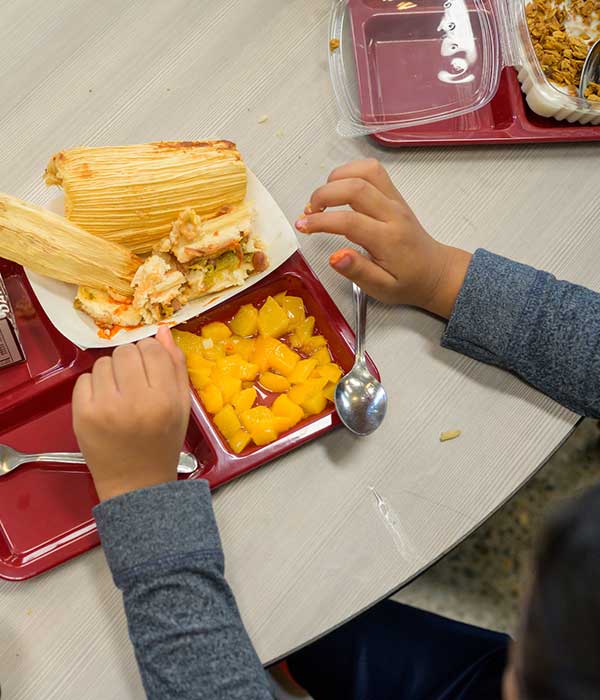
Tamales developed by Lucy De León’s team are served for lunch at William Walker Elementary School. Photo credit: Shawn Linehan
OFSSGN provides networking opportunities, resources, technical assistance, and training, as well as impact measurement for farm to school and school garden efforts throughout the state.
An information, advocacy, and networking hub for communities working to bring local food sourcing and food and agriculture education into school systems and early care and education environments
The Department works to connect Oregon farmers, ranchers, seafood harvesters, and food processors with school cafeterias, early child care centers, and summer meal sites, enabling more Oregon agricultural products to be served in the lunch line.
Through grantmaking and other programs, the Department supports in-classroom education, school gardens, and educational resources for farm to child nutrition programs throughout the state.
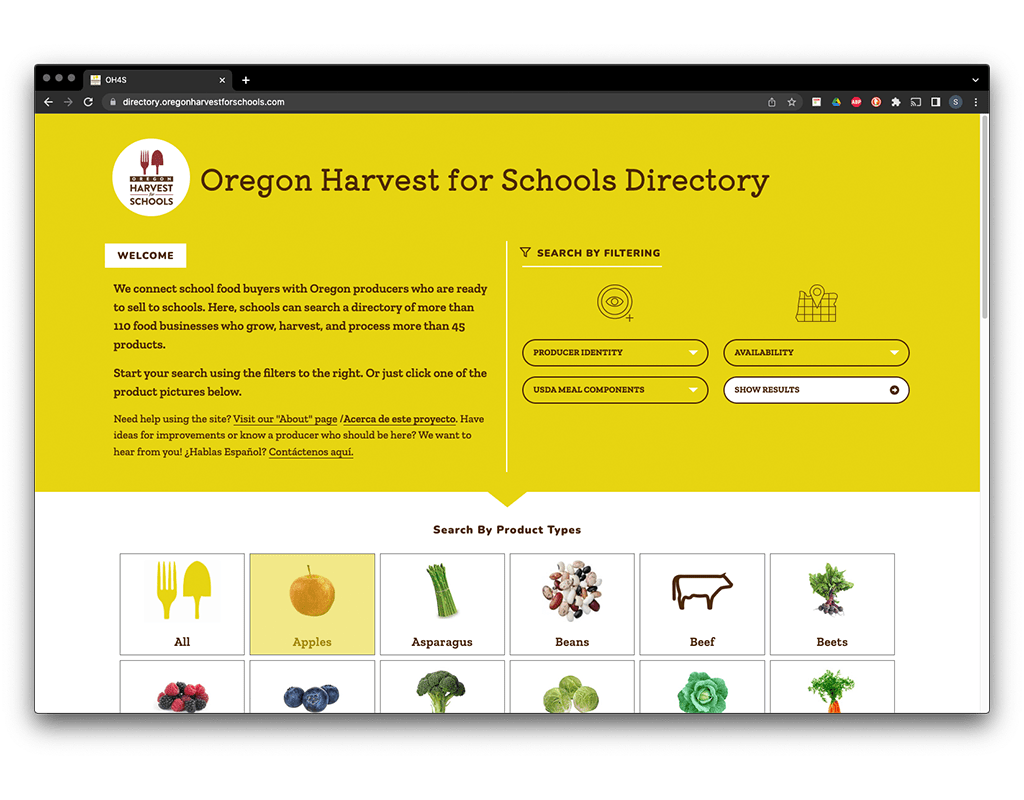
The Oregon Harvest for Schools Directory connects Oregon food producers—farmers, ranchers, fishers, tribal foods, and prepared food providers—with schools and early care sites that are actively searching for more local items to integrate into their meal programs.
A report that identifies important gaps in the available Farm to Institution data to facilitate ongoing measurement and evaluation, and aid in setting programmatic priorities going forward
What if schools had an additional $.07 per meal to spend on buying local foods for the lunch line? During this research, we placed particular emphasis on evaluating the economic effects of increased procurement of local foods.
A Farm to School Showcase is designed to highlight producers, processors, and distributors of local foods by creating a designated “Showcase” space for these vendors within a larger school nutrition trade show.
Welcome to the Salem-Keizer School District in Oregon, where 40,000 students are eating more healthy, local food and learning in school gardens, cafeterias, and classrooms. Meet our diverse team of partners who brought this farm to school program to life.
You can buy it in stores, you can order it at a restaurant, but Oregon schools have a tough time getting chicken raised without antibiotics to serve to children.